
To clean a leather sofa, first check what type of leather it is. Vacuum the seams and dust the surface, then wipe it with a soft cloth that is barely damp with lukewarm water and a little pH-neutral soap. Dry it straight away with a clean cloth, and apply a leather conditioner every 6 to 12 months to stop it drying out and cracking.
A good leather sofa can last for many years, and it often looks better with age. But leather is a natural material, and it does not like strong chemicals, too much water or heat. Many leather sofas are damaged not by dirt, but by the products used to clean them. This guide explains how to clean and care for leather safely.
Not all leather is the same. The type you have decides how careful you need to be.
| Type | What it is like | Care |
|---|---|---|
| Pigmented (protected) | Most common on family sofas. Even colour, slight sheen, a protective coating. | The most forgiving. Mild soap and water is usually fine. |
| Semi-aniline | A light protective layer. Softer feel, some natural markings show. | Gentle. Minimal moisture. |
| Aniline | No protective coating. Very soft and natural, marks and darkens easily. | Very delicate. Dust only, and leave cleaning to a professional. |
| Nubuck and suede | Brushed, velvety surface. | Dry brushing only. Water marks easily. |
A quick test: put a single small drop of water on a hidden area, such as under a seat cushion. If it sits on the surface, the leather is probably protected. If it soaks in and darkens the leather, it is likely aniline, and you should avoid wet cleaning. Let the area dry naturally.
Take off any cushions and vacuum the seams, creases and base with a soft brush attachment. Grit in the creases rubs against the leather every time you sit down and slowly wears the finish.
Wipe the whole sofa with a soft, dry microfibre cloth to remove surface dust.
Add a few drops of a pH-neutral soap, or a cleaner made for leather, to a bowl of lukewarm water. Dip a soft cloth, wring it out until it is only just damp, and wipe the leather in gentle sections. Do not scrub.
Follow each section with a clean, dry cloth. Leather should never be left wet.
Once the sofa is clean and dry, apply a leather conditioner with a soft cloth, following the product’s instructions. Conditioner keeps the leather supple and helps prevent drying and cracking. Test it on a hidden area first, as some conditioners slightly darken the colour.
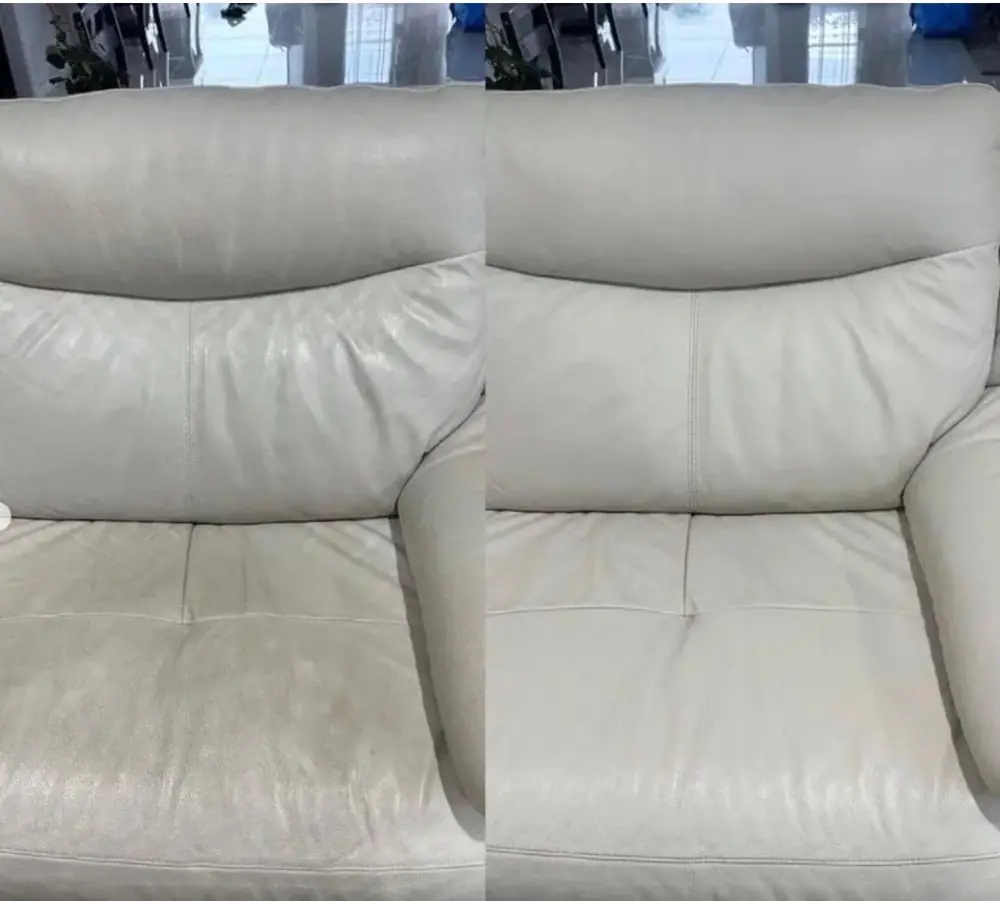
Blot straight away with a dry, absorbent cloth. Do not rub. On protected leather, a barely damp cloth can then remove any residue.
Fresh grease can sometimes be lifted by blotting. Darkened arms and headrests, where body oil has built up over months or years, are much harder. Regular light cleaning slows the build-up, but heavy marks usually need a professional clean.
Ink on leather is one of the hardest marks to remove at home, and the wrong product can lift the colour along with the ink. If you try anything, test it on a hidden spot first. Often the safest choice is to leave it for a professional.
Small surface scuffs on protected leather can sometimes be softened with conditioner and a soft cloth. Deeper scratches and colour loss need a leather repair specialist.
Body oils and dirt build up on arms and headrests over time. A professional leather clean lifts them safely. Send a photo for a free quote.
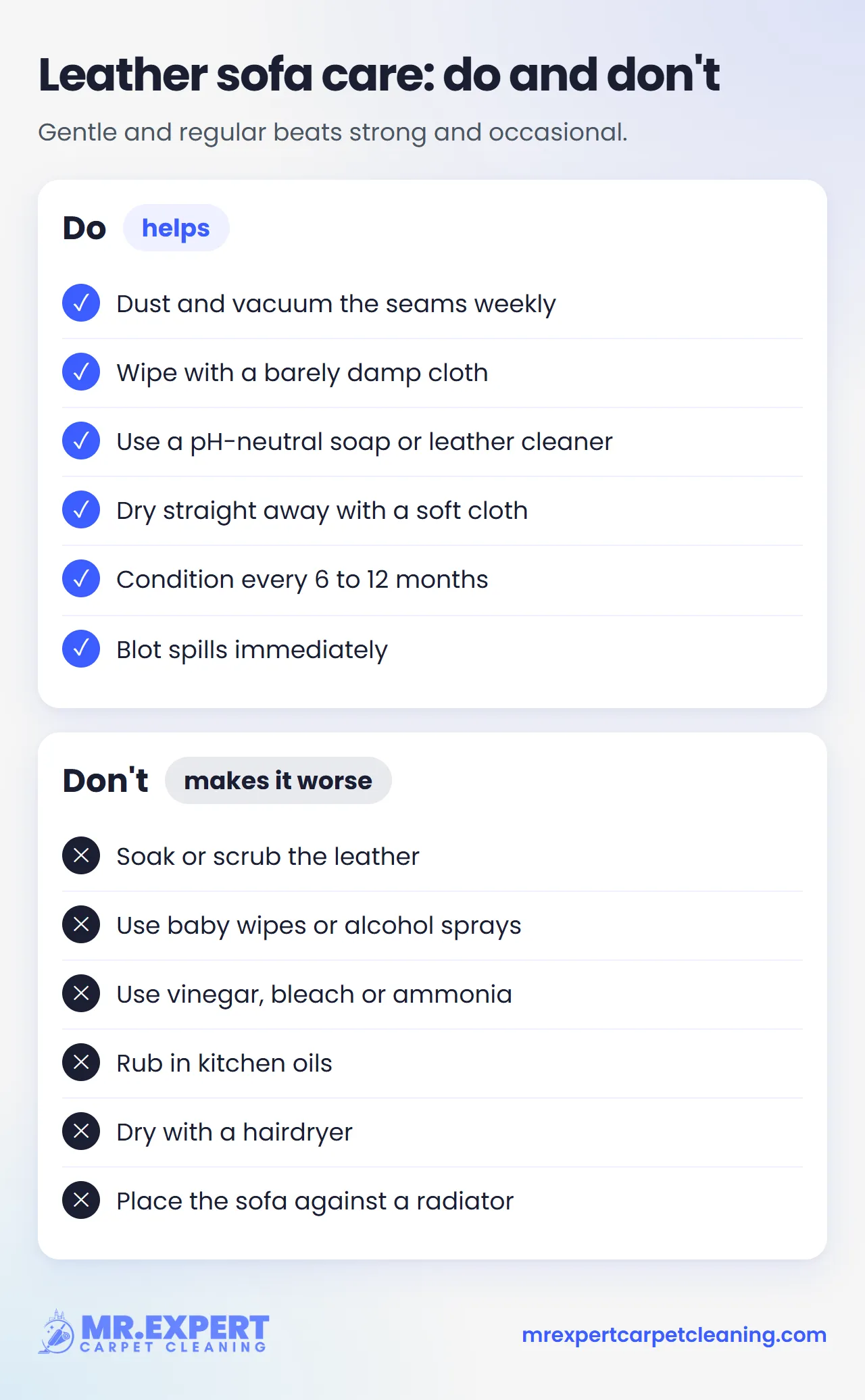
Some popular household tips do more harm than good on leather:
Pale leather looks wonderful but shows everything: dye from jeans, newsprint, pet hair and the grey film that builds up where people sit. Wipe it more often, perhaps every couple of weeks, with a barely damp cloth so dirt never gets a chance to build up. Blue dye transfer from denim is common on cream sofas and is much easier to remove when it is fresh. A throw on the most-used seat helps a lot. If marks have built up over a long time, a professional clean usually brings pale leather back far better than heavy home scrubbing, which risks wearing through the finish.
Many pet owners choose leather because hair does not cling to it the way it does to fabric. The risks are claws and drool. Keep claws trimmed, use a throw where your pet likes to lie, and wipe away drool and muddy paw prints straight away with a barely damp cloth, then dry the area. Pet urine on leather should be blotted immediately and the area wiped and dried. Urine left on leather can stain and stiffen it, so if an accident has soaked into the seams or cushions, get professional help quickly.
Leather is easier to wipe clean after a spill than fabric, which is why many families choose it. But it needs regular conditioning, and it is less forgiving of the wrong products. Fabric sofas hide some marks better but absorb spills faster. If you also have fabric furniture, our guide on how to clean a fabric sofa covers that side.
Professional leather cleaning is worth considering if the arms and headrests have darkened, if the sofa feels sticky or dull all over, if you have aniline or delicate leather, or if you have tried home cleaning without success. A professional leather clean typically uses cleaners matched to the leather type and finishes with a conditioner, so the sofa is cleaned without being dried out.
Our team cleans leather and fabric sofas, armchairs and corner sofas in homes across Slough and the surrounding area. We are fully insured, and if you are not happy with the result we come back and re-clean free. Find out more about our sofa cleaning service.
It is best not to. Many wipes contain alcohol, fragrance or other ingredients that can dry out leather or strip its finish over time. A barely damp cloth with a little mild soap is safer.
Every 6 to 12 months for most homes. More often if the sofa is in a warm, sunny room or near a radiator, as these dry leather out faster.
No. Kitchen oils can darken leather, leave it sticky, and go rancid over time. Use a conditioner made for leather.
Body oils, hair products and skin contact. They build up slowly and can be hard to remove at home. A professional leather clean usually improves them a lot.
No. Steam and heat can shrink, stiffen and discolour leather, and damage its finish. Stick to a barely damp cloth, or book a professional who uses products made for leather.
Call or WhatsApp for the fastest reply, or leave your details and we will get back to you.