
To clean a fabric sofa, first check the cleaning code on the label. Vacuum it thoroughly, then spot clean marks with the right product for that code, using as little liquid as possible and blotting rather than rubbing. Clean whole cushion panels evenly rather than single spots to avoid water rings, and let it dry fully with good airflow.
A fabric sofa takes a lot of daily wear: food, drinks, pets, children, and the body oils that slowly darken the arms and headrests. A regular home clean keeps it looking fresh. The trick is knowing what your fabric can handle, because the wrong product or too much water can leave marks that are worse than the original stain.
Look for a label under the seat cushions or on the base of the sofa. Most sofas have a cleaning code that tells you what is safe:
Our guide to sofa fabric codes explains each one in more detail. If there is no label, treat the fabric with caution and test everything on a hidden area first.
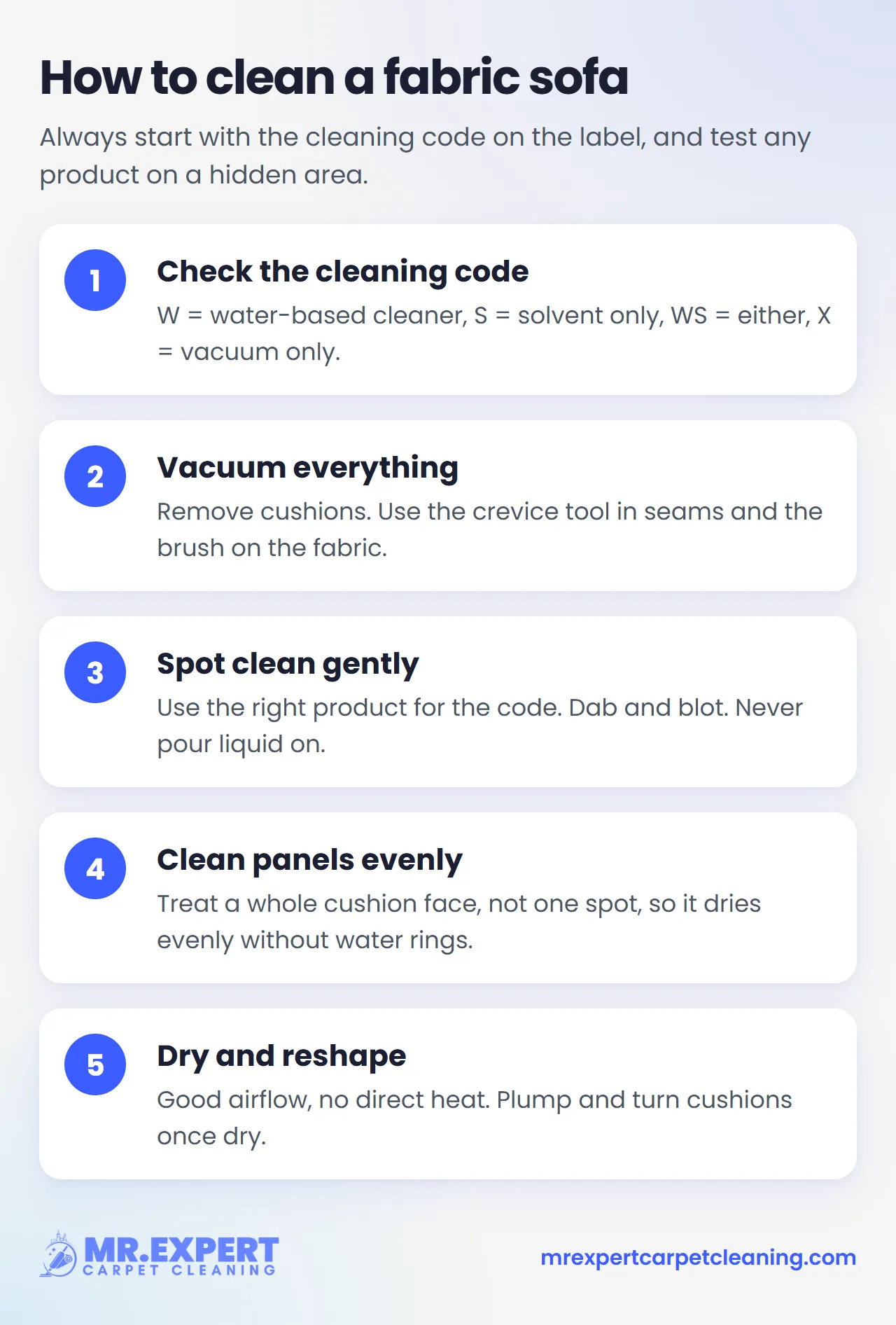
Take off the seat and back cushions. Vacuum the base, the seams and down the sides with the crevice tool, where crumbs, coins and hair collect. Then use the brush tool on every fabric surface, including the back and sides of the sofa and both sides of each cushion. Vacuuming alone removes a surprising amount of dirt and makes the rest of the clean far more effective.
On fabrics with a pile, such as chenille or velour, a soft clothes brush lifts flattened areas and loosens dirt before cleaning. Brush gently in one direction.
For a W or WS fabric, mix a small amount of mild washing-up liquid into lukewarm water. Dampen a white cloth, wring it out until it is only just damp, and dab the mark from the outside in. Blot with a dry cloth. Repeat until the mark stops lifting, then dab with plain water to rinse and blot again.
For an S fabric, use a solvent-based upholstery cleaner, following the instructions exactly and with the window open. Do not use water.
This is the step most people miss. If you clean one small mark, the damp area dries from the edges inwards and leaves a tide mark. To avoid this, lightly clean the whole face of the cushion or arm, edge to edge, so it dries evenly. Use as little moisture as possible.
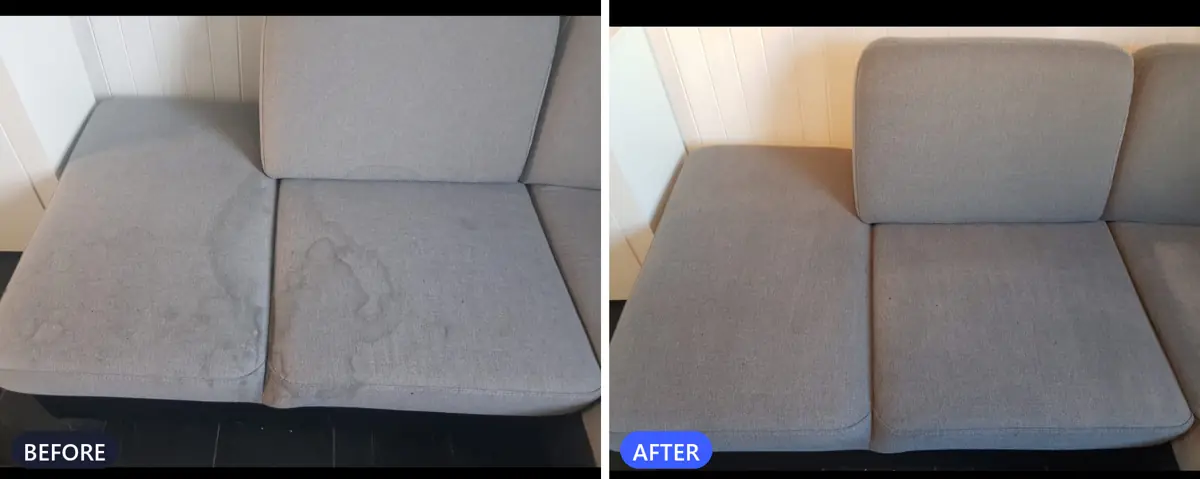
Open windows or put a fan in the room. Do not use a hairdryer or put cushions on a radiator, as direct heat can shrink fabric and set any remaining marks. Once dry, brush the pile gently, plump the cushions and put them back.
| Stain | What to do |
|---|---|
| Food and grease | Scrape off any solids. Blot with a dry cloth, then dab with washing-up liquid solution (W fabrics). Grease often needs a solvent cleaner on S fabrics. |
| Tea, coffee and juice | Blot quickly with a dry cloth. Dab with cold water and a little washing-up liquid, then rinse. |
| Red wine | Blot, do not rub. Cold water dabbing straight away. Avoid salt on fabric, as it can leave a residue. |
| Ink and pen | Difficult. Test a little rubbing alcohol on a hidden area first. If unsure, leave it to a professional. |
| Pet accidents | Blot up as much as possible. Use an enzyme cleaner suitable for upholstery. Do not soak the cushion. |
| Body oil on arms and headrests | Builds up slowly and darkens fabric. Light regular cleaning helps, but heavy build-up usually needs a professional clean. |
A professional upholstery clean lifts the body oils, food and dirt that build up over years. Send us a photo on WhatsApp for a free quote.
For general mustiness, sprinkle bicarbonate of soda over the dry fabric, leave it for a few hours, and vacuum it off thoroughly. Test it on a hidden area first on dark fabrics. Air the room well. If a smell keeps coming back, it is usually coming from inside the cushions, from pet urine, spilt drinks or sweat, and surface treatments will not reach it.
If you are not sure what your sofa is made of, the label under the cushions usually lists the fibre content as well as the cleaning code.
A home clean is great for upkeep, but some jobs are better left to a professional: X-coded or delicate fabrics, heavy all-over soiling, darkened arms and headrests, water rings from a previous clean, and pet urine that has soaked into the cushions. Professional upholstery cleaning uses controlled moisture and strong extraction, so dirt is lifted out rather than spread around, and the sofa dries much faster.
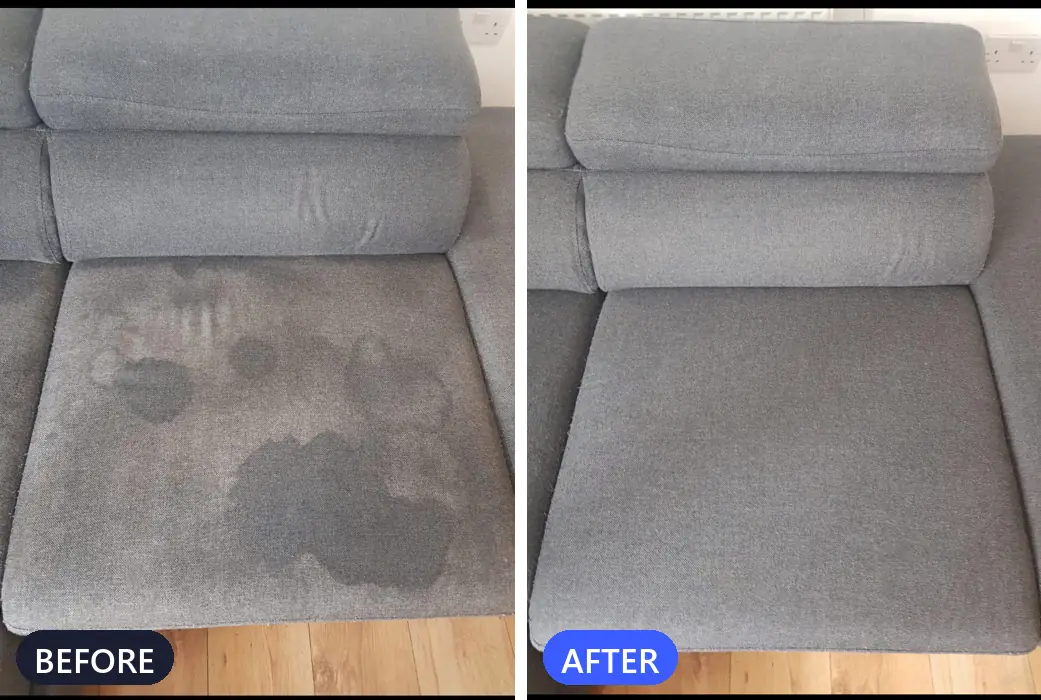
Our team cleans fabric sofas, armchairs, corner sofas and dining chairs in homes across Slough and the surrounding area. We use eco-friendly products that are safe for children and pets once dry. Find out more about our sofa cleaning service.
Only if the label says so. Many covers shrink or lose their shape, and the zip is often there for fitting, not washing. If one cover is washed and the others are not, the colours may no longer match.
Water rings form when one small area is wetted and dries from the edges inwards, carrying dirt to the edge. Cleaning the whole panel evenly and using less liquid prevents them.
Only with an upholstery tool, on a fabric with a W or WS code, and with great care not to over-wet. Many home machines leave too much moisture behind, which causes water marks and slow drying.
Vacuum it weekly or fortnightly. A professional clean every 12 to 18 months suits most homes, more often with pets or young children.
Most fabric freshener sprays only mask smells for a short time, and some leave a residue that attracts dirt. Test any spray on a hidden area first. Removing the cause of the smell, by vacuuming, deodorising with bicarbonate of soda or a professional clean, works better in the long run.
Call or WhatsApp for the fastest reply, or leave your details and we will get back to you.