
To get coffee out of carpet, blot up as much as you can straight away with a clean white cloth. Dab the stain with cold water, then with a mix of a teaspoon of washing-up liquid in a cup of cold water, working from the outside in and blotting after each application. Rinse with plain water and blot dry. For old stains, a little white vinegar in the mix can help on synthetic carpet.
Coffee is one of the most common carpet stains in homes and offices. A knocked mug by the sofa, a spill on the stairs on the way out of the door, a slow drip under the desk. Coffee contains tannins, natural plant compounds that give it its colour and can dye carpet fibres, so it is worth acting quickly. Fresh coffee is usually easy to remove. Old coffee takes more patience but often still comes out.
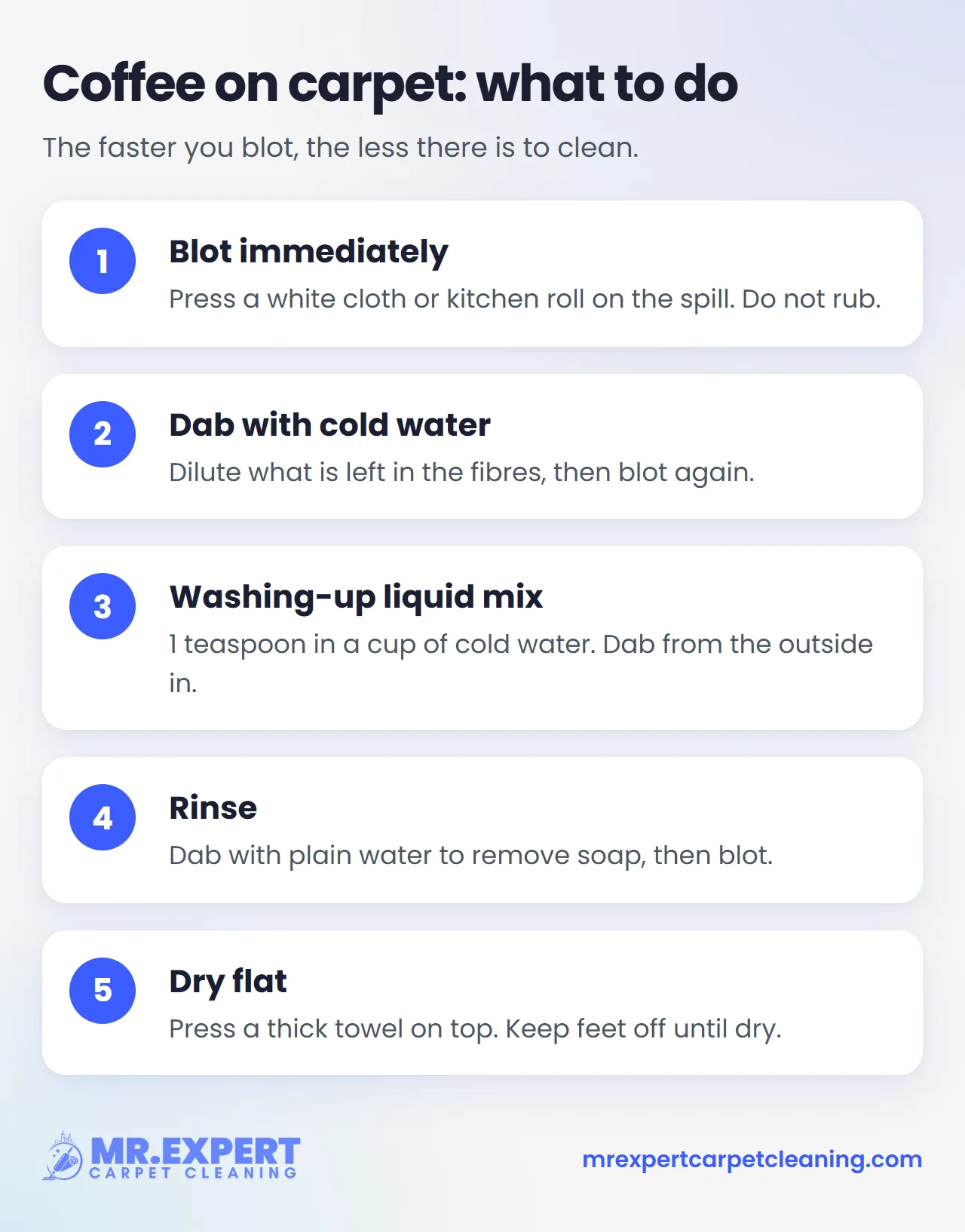
Black coffee is mostly a colour stain. Coffee with milk and sugar adds two more problems. Milk contains fat and protein, which can turn sour and smell if not fully rinsed out. Sugar leaves a sticky residue that attracts dirt, so the spot turns grey a few weeks later. For both, the washing-up liquid step and a thorough rinse are especially important. If a sour smell appears a few days later, an enzyme cleaner suitable for carpets will break down the milk residue.
Dried coffee stains are harder, because the tannins have had time to bond with the fibres. Try this:
Some old stains fade but leave a light brown shadow. A professional stain treatment can usually go further than home methods.
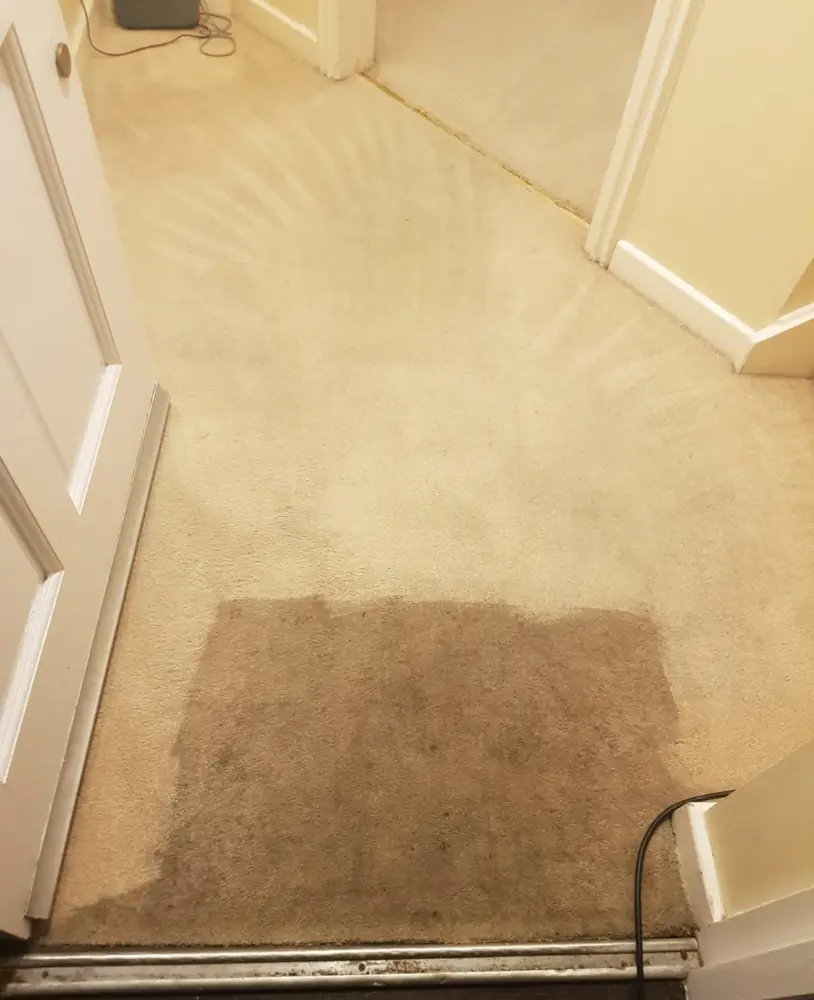
Old coffee stains and big spills that soaked into the underlay often need professional treatment. Send a photo on WhatsApp for advice.
On cream, beige and pale grey carpets, coffee shows as an obvious brown patch, so it is worth being thorough: several rounds of the washing-up liquid mix, a careful rinse and a towel pressed on overnight. On darker or patterned carpets, the colour may be hidden, but the sugar and milk residue is still there and can cause a sticky, grey patch or a sour smell later. Clean and rinse the area even if you cannot see much of a stain.
A full cafetière or a jug of coffee is a bigger job than a mug, because the liquid soaks through the carpet into the underlay. Blot hard with several towels, standing on them to push them down. Change towels until they come up almost dry. Then clean the surface as above. Open windows and run a fan to help the carpet and underlay dry from below. If a smell or brown ring appears over the following days, the underlay is still holding coffee, and a professional extraction clean is the most reliable fix.
Carpet stain removers made for tea and coffee can help, especially on old stains. Choose one that says it is suitable for your type of carpet, follow the instructions exactly, and test it on a hidden area first. Do not mix it with other products, and always rinse and blot afterwards. If you have tried one product without success, stop rather than layering several on top of each other.
Wool takes up tannin stains readily. Use cold water and only a small amount of mild washing-up liquid. Avoid vinegar, bleach and oxygen-based stain removers unless the label clearly says they are safe for wool. Blot gently and do not over-wet the backing. For valuable rugs, blot up what you can and call a professional.
Check the cleaning code first. On W or WS fabrics, use the same method with as little water as possible, and clean the whole cushion panel lightly so it dries evenly without a ring. On S fabrics, blot only and use a solvent-based upholstery cleaner. Our guide on cleaning a fabric sofa explains more.
Coffee stains are one of the main reasons office carpets look tired, especially around kitchens, meeting rooms and desks. A simple spill kit by the kettle, with white cloths and a spray bottle of mild solution, helps staff deal with spills before they set. For walkways that have already darkened, a scheduled deep clean is the answer. Our guide to commercial carpet cleaning covers how often to book.
Tea behaves almost exactly like coffee, because it contains tannins too, so use the same method. Hot chocolate is similar to milky coffee, with extra fat and sugar, so rinse well. Cola and fizzy drinks are mostly sugar and colour, and benefit from a thorough rinse. Red drinks such as blackcurrant are closer to red wine. See our guide on getting red wine out of carpet.
Call a professional if the stain is large, old, on wool or a valuable rug, or keeps reappearing as the carpet dries. Big spills that soaked into the underlay also need professional extraction to stop smells and wicking. Our team treats stains on carpets, rugs and sofas across Slough and the surrounding area. Find out more about our stain and odour removal service.
Milk adds protein and fat, which can leave a smell if not fully rinsed out. Use cold water, washing-up liquid to break down the fat, and rinse thoroughly.
Avoid it, especially with milky coffee. Heat can set protein stains and spread the colour. Cold or lukewarm water is safer.
The carpet was over-wetted and the stain wicked outwards as it dried. Dab the ring lightly with plain water, blot well, and press a dry towel on it overnight.
It helps absorb liquid and odour from a fresh spill, but it will not remove the brown colour on its own. Use it alongside blotting and washing-up liquid.
Until it is completely dry, usually a few hours with good airflow. Walking on damp carpet transfers dirt from shoes and can leave a new mark in the clean spot.
Call or WhatsApp for the fastest reply, or leave your details and we will get back to you.