
To get red wine out of carpet, blot up as much as you can straight away with a clean white cloth, without rubbing. Dab the stain with cold water, then with a mix of a little washing-up liquid and cold water, blotting after each application and working from the outside in. Rinse with plain water and blot dry. For dried stains, dampen and repeat patiently.
A glass of red wine tipped onto a cream carpet is a moment most of us dread. The colour looks dramatic, but if you act quickly and use the right method, red wine can usually be removed or greatly reduced. The secret is not a magic product. It is blotting, cold water and patience.
Red wine contains natural colour pigments from grape skins, along with sugar and a little acid. The pigments bind to carpet fibres, especially natural fibres like wool. The longer the wine sits, the more firmly it bonds. That is why the first few minutes matter so much.
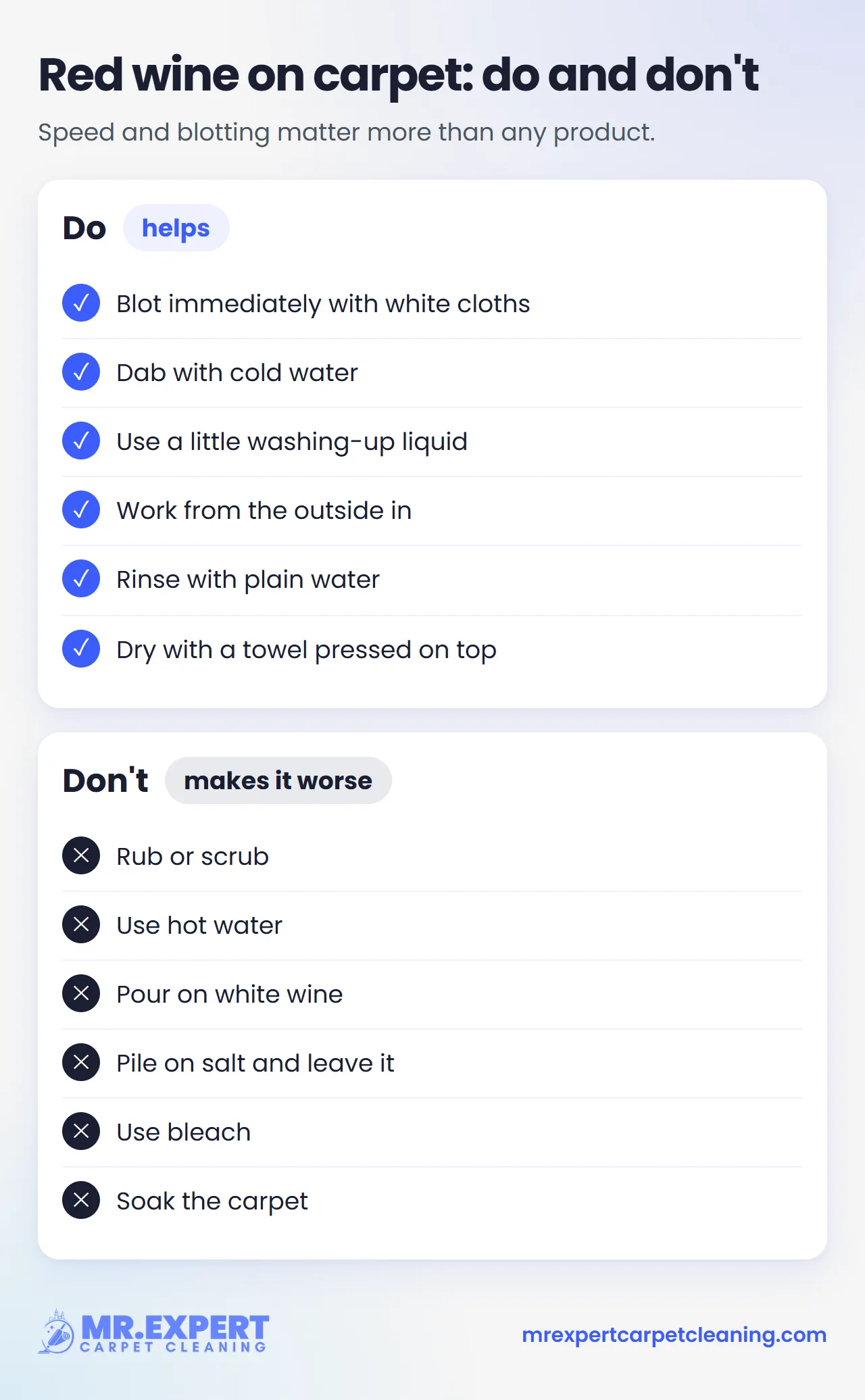
If you have found the stain the next morning, it is still worth trying:
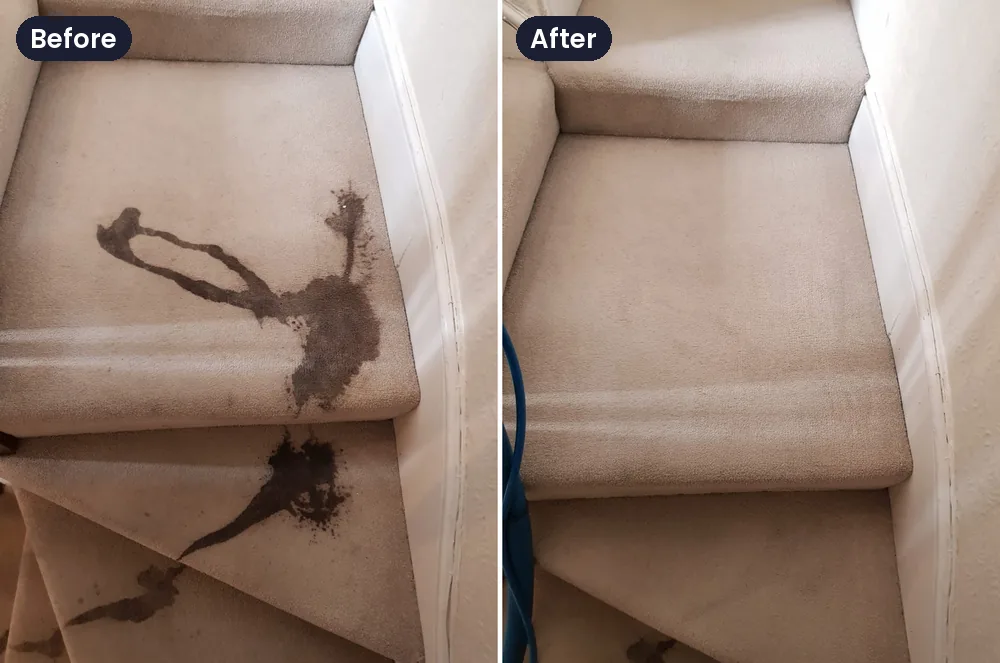
Dried stains often fade but may leave a faint pink or brown shadow. Professional stain treatment can usually go further.
| Tip | The reality |
|---|---|
| Pour white wine on it | Plain cold water dilutes it just as well, without extra sugar. |
| Cover it in salt | Absorbs a little, but can leave residue and may help set the colour on some carpets. |
| Sparkling water | No better than plain cold water. The bubbles do not lift the stain. |
| Scrub hard | Spreads the stain and frays the carpet pile. |
| Bleach | Removes the carpet’s own colour, leaving a permanent pale patch. |
Red wine dye bonds with carpet fibres over time. Professional stain treatment gives the best chance of removing it. Send us a photo on WhatsApp.
How well red wine comes out depends a lot on what your carpet is made of:
If you do not know what your carpet is made of, check any paperwork from when it was fitted, or look at an offcut if you kept one.
Blackcurrant squash, cranberry juice, beetroot, berry smoothies and some fizzy drinks contain similar strong colours. The same method works for all of them: blot fast, cold water, a little washing-up liquid, rinse, and blot dry. Sugary drinks also leave a sticky residue, so the rinse step is particularly important to stop the spot attracting dirt later.
Wool absorbs red wine pigment readily, so speed matters even more. Use only cold water and a very small amount of mild washing-up liquid. Do not use vinegar, bleach or oxygen-based stain removers on wool unless the label clearly says they are safe for wool, as they can damage or discolour the fibres. Blot gently and avoid over-wetting. For valuable or Persian rugs, it is safer to blot up what you can and call a professional.
Check the cleaning code on the label first. On fabrics coded W or WS, follow the same blot, dab and rinse method, using as little water as possible to avoid water rings. On S-coded fabrics, blot only and use a solvent upholstery cleaner. Our guide on cleaning a fabric sofa explains the codes.
If the stain reappears as the carpet dries, wine has soaked into the backing and is rising back up. This is called wicking. Dab it again with cold water, then press a thick folded towel onto the spot with something heavy on top and leave it overnight. The towel draws the moisture and colour up into it. Large spills often need a professional extraction clean to flush the backing properly.
If the wine has also splashed clothes, a tablecloth or cushion covers, rinse them from the back of the fabric under cold running water as soon as you can, then wash them following the care label. Do not put stained fabric in a hot dryer until the stain has gone, as heat can set what is left. It is the same principle as the carpet: cold water first, and no heat until the colour is out.
Call a professional if the stain is large, has been there a while, is on wool or a valuable rug, or keeps coming back. Send us a photo and we will give you an honest view of whether it is likely to come out. Our team treats stains on carpets, rugs and sofas across Slough and the surrounding area. Find out more about our stain and odour removal service.
It is a myth. White wine dilutes the red wine a little, but plain cold water does the same job without adding sugar and more liquid to the carpet.
Salt can absorb some liquid, but it can also leave a residue and, on some carpets, help set the colour. Blotting with cloths and cold water is more reliable.
A little white vinegar mixed with washing-up liquid and water can help on synthetic carpets. Test it on a hidden area first and do not use it on wool or delicate rugs.
Often it can be lightened a lot, and sometimes removed completely. The longer it has been there, the harder it is. Professional treatment gives the best chance with old stains.
Some do help. Choose one that says it is for carpet and for wine or drink stains, follow the label exactly, and test it on a hidden area first. Avoid using several different products on the same stain.
Call or WhatsApp for the fastest reply, or leave your details and we will get back to you.