
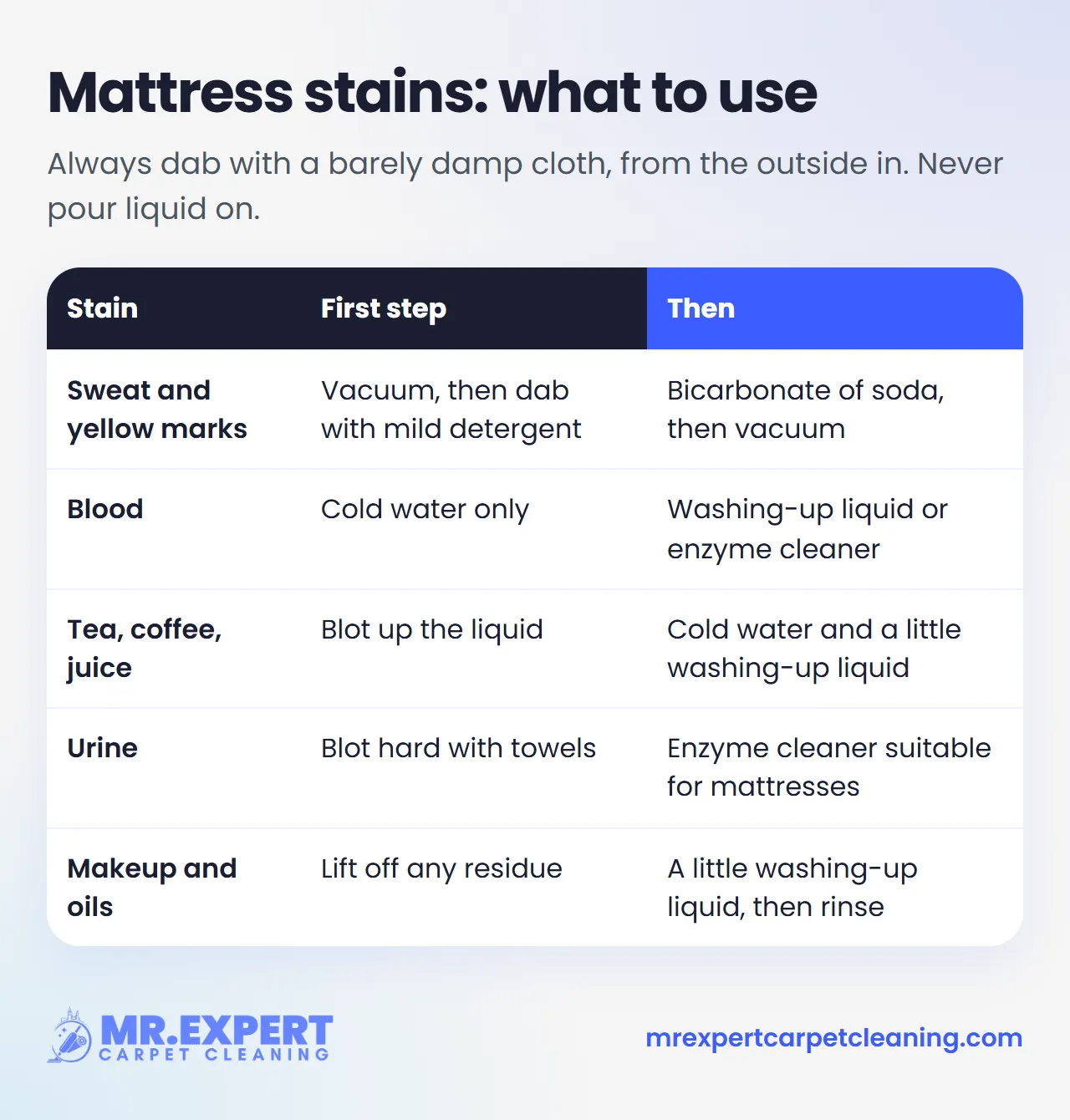
To remove stains from a mattress, blot up any liquid, then dab the stain with a cloth that is only just damp with cold water and a little mild detergent, working from the outside in. Blot dry, repeat until no more colour lifts, and let the mattress dry completely. Never pour liquid onto a mattress or soak it.
Mattress stains are almost unavoidable. Sweat, spilt tea, a nosebleed, a child’s accident: over the years they all leave marks. Unlike sheets, a mattress cannot go in the washing machine, so it needs a gentler approach. This guide covers how to treat the most common mattress stains at home without making them worse.
A mattress is a thick block of foam, fibres and springs. Liquid that gets deep inside takes a very long time to dry. While it sits there, it can cause mould, mildew and smells, and it often brings the stain back up to the surface as it dries. So every method below uses a cloth that is only just damp, never a spray bottle soaking the area, and never a bucket.
Yellow patches are the most common mattress stain. They build up slowly from sweat, body oils and moisture, usually where your head and upper body lie.
Light, recent marks often fade well. Old yellowing that has built up over years rarely disappears completely with home methods, but it can usually be improved a lot with a professional clean.
Use cold water only. Heat sets blood permanently. Blot up as much as you can, then dab with a cold, damp cloth. Add a drop of washing-up liquid if needed. For dried blood, dampen the stain with cold water, leave it for ten minutes to soften, then dab and blot. An enzyme cleaner can help with stubborn marks. Our guide to getting blood out of carpet uses the same principles.
Act fast. Strip the bedding and blot hard with dry towels to pull up as much liquid as possible. Then dab with cold water and a little washing-up liquid, rinse with plain water, and blot again. Prop the mattress up or open a window so air can reach both sides if the spill was large.
Urine needs prompt treatment because the smell can linger long after the stain fades. Blot hard with towels, standing on them if needed, then apply an enzyme cleaner suitable for mattresses, following the label. Enzyme cleaners break down the compounds that cause odour. Let it dry fully. Large or old urine stains that have soaked in are a good reason to book a professional mattress clean.
Old sweat marks, set-in blood and large spills usually need a professional clean. Send a photo on WhatsApp and we will tell you what is possible.
Gently lift off any residue first. Then dab with a little washing-up liquid in cold water, which helps break down oils. Rinse and blot. Fake tan can dye fabric, so treat it quickly and expect that some colour may remain.
Stains that have been on a mattress for months or years are much harder to shift, but you can often improve them. Work in short sessions rather than one long, wet scrub:
If a stain has not changed after two or three attempts, more home treatment is unlikely to help and may damage the cover. That is the time to stop and get professional advice.
Sometimes the mark fades but a smell remains, especially after urine, sweat or a drink with milk or sugar in it. The cause is usually residue deeper in the filling. Sprinkle bicarbonate of soda over the dry area, leave it overnight if you can, and vacuum it up. Air the mattress in a well-ventilated room. If the smell comes back on warm nights, the residue is too deep for surface treatment and a professional clean is the most reliable fix.
Memory foam and latex mattresses are especially absorbent, so use the least moisture possible and never steam them. Pocket sprung mattresses are usually a little more forgiving, but the same rules apply. Always check the manufacturer’s care label, as some say certain products can affect the warranty.
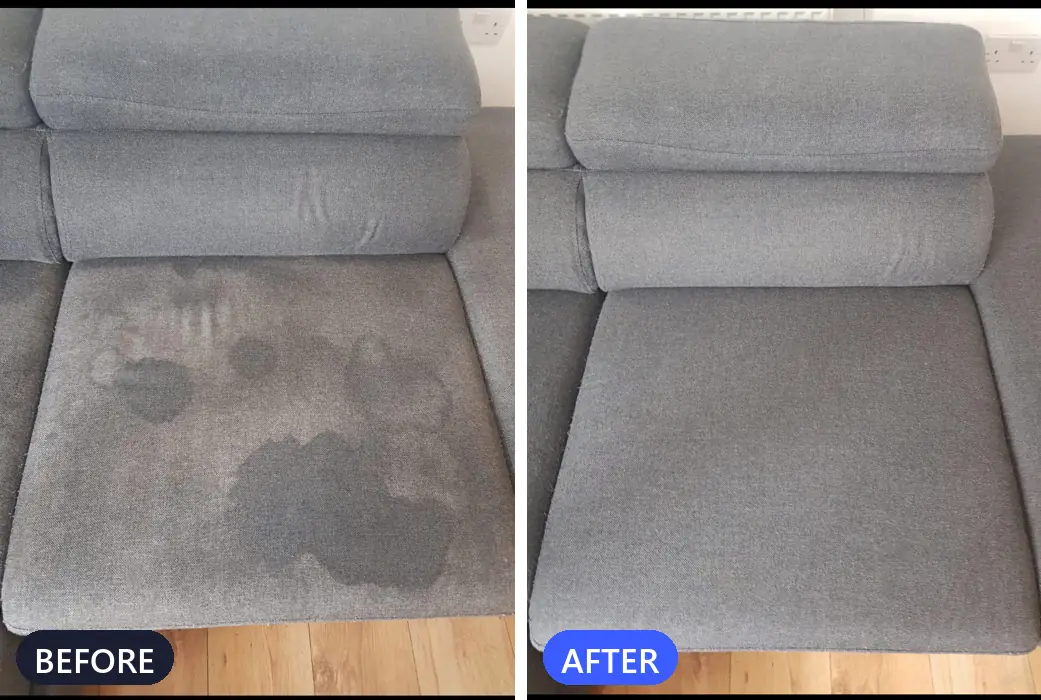
Home methods work well on fresh, small stains. For old yellowing, large spills, urine that has soaked in, or a mattress in a rental property that needs to look its best, a professional clean gives a much better result. Our team cleans mattresses of all sizes across Slough and the surrounding area, using eco-friendly products that are safe for children and pets once dry.
Yellow patches usually build up slowly from sweat, body oils and moisture. They are common and not a sign of poor hygiene. Regular light cleaning and a protector help, but older yellow marks often need a professional clean.
No. Bleach can damage the fabric and foam, and it rarely removes body-fluid stains anyway. Stick to cold water, mild detergent and an enzyme cleaner suitable for mattresses.
It can lighten some stains on white mattress covers, but it can also weaken fabric and bleach coloured covers. If you try it, use a low-strength solution sparingly, test a hidden spot, and never soak the mattress.
Usually a few hours in a warm, airy room. Press a dry towel on the area and leave the bed unmade until it is completely dry.
It is not a good idea. Carpet machines put far too much water into a mattress, which can take days to dry and may cause mould and smells. Gentle spot cleaning at home, or a professional mattress clean with controlled moisture, is safer.
Not always. Fresh stains usually come out well. Old yellowing, set-in blood and dye-based stains may fade but not disappear completely. A professional can usually tell you in advance what is realistic.
Call or WhatsApp for the fastest reply, or leave your details and we will get back to you.