
To clean a mattress, strip the bed and wash the bedding, vacuum the mattress slowly on both sides, sprinkle bicarbonate of soda over it and leave it for a few hours, then vacuum again. Spot clean stains with a barely damp cloth and mild detergent, never soak it, and let it dry completely before making the bed.
We spend roughly a third of our lives in bed, and a mattress quietly collects sweat, skin flakes, dust mites and the odd spilled drink. Most people never clean theirs at all. The good news is that a basic mattress clean is easy, needs only a vacuum and a few household products, and makes a real difference to how fresh your bed feels.
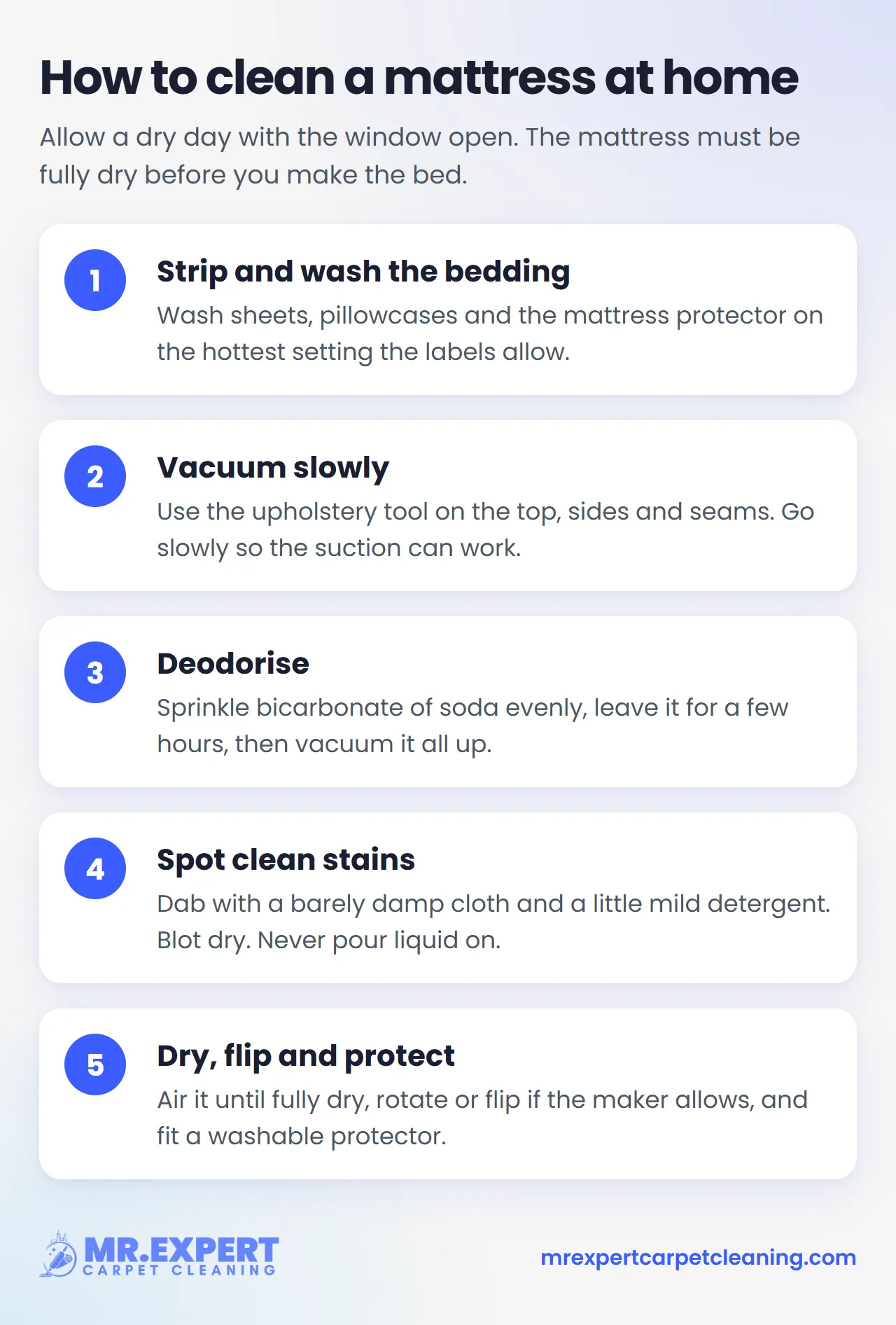
Take off the sheets, pillowcases, duvet cover and mattress protector. Wash them on the hottest setting their care labels allow. While they are in the machine, you can work on the mattress itself.
Use the upholstery tool and work across the whole surface in slow, overlapping strokes. Fast passes leave most of the dust behind. Pay attention to the seams, piping and buttons, where dust and skin flakes collect. Do the sides too. If your mattress can be flipped, vacuum the other side later.
Sprinkle a thin, even layer of bicarbonate of soda over the top of the mattress. Leave it for a few hours, or longer if you can, ideally with the window open and sunlight on the bed. Then vacuum it all up thoroughly. Bicarbonate of soda helps absorb mild odours and a little moisture. It will not remove stains.
Mix a small amount of mild washing-up liquid into cold water. Dampen a cloth, wring it out well, and dab the stain from the outside in. Blot with a dry cloth. Repeat until the stain stops lifting. The golden rule is never soak a mattress. Water that gets deep inside takes days to dry and can cause mould and smells.
Leave the mattress uncovered until it is completely dry. Open windows or run the heating. Rotate it head to foot, and flip it if the manufacturer says it is a two-sided mattress. Many modern mattresses are one-sided and should only be rotated. Finally, fit a clean, washable mattress protector before making the bed.
A professional clean lifts sweat, dust mites, allergens and stains from deep inside the mattress. Our team covers Slough and the surrounding area.
| Type | Tips |
|---|---|
| Memory foam | Very absorbent. Use the least moisture possible and never soak or steam. Dry thoroughly. |
| Pocket sprung | Vacuum well, especially seams. Usually more tolerant of light spot cleaning. |
| Hybrid | Treat the top as you would memory foam. Gentle and dry. |
| Latex | Mild detergent and a barely damp cloth only. Keep out of strong direct heat. |
| Children’s mattresses | Use a waterproof protector. Clean accidents quickly and dry fully before use. |
Always check the manufacturer’s care label. Some makers state that using the wrong products can affect the warranty.
Most mattress smells come from sweat, body oils and moisture that build up over time. Others come from spills, accidents or a damp room. Match the fix to the cause:
A good, washable mattress protector is the single easiest way to keep a mattress clean. It catches sweat, spills and skin flakes before they reach the mattress, and you can simply put it in the washing machine. Waterproof protectors are worth having for children’s beds, guest beds and anyone with pets that sleep on the bed. Choose a breathable one, so you do not get hot at night, and wash it every couple of weeks along with your sheets.
A clean mattress on a dusty base will not stay clean for long. While the mattress is airing, vacuum the divan or slatted base, including underneath it, where dust and fluff gather. Wipe wooden or metal frames with a damp cloth. Fabric divans and upholstered headboards collect dust, hair and skin oils, especially where your head rests. Vacuum them with the upholstery tool and spot clean any marks with a barely damp cloth and a little mild detergent, testing a hidden area first. Fabric headboards can also be cleaned professionally at the same time as the mattress.
A professional clean uses equipment that lifts dirt, sweat residue and allergens from deeper inside the mattress than a household vacuum can reach, while controlling the moisture so the mattress dries properly.
Cleaning makes a mattress fresher and more hygienic, but it cannot fix a mattress that is sagging, lumpy or no longer supportive. If you wake up stiff, can feel springs, or the mattress has a visible dip, it may be time for a new one, whatever its condition.
Our team cleans single, double, king and super king mattresses in homes and rental properties across Slough and nearby towns. We use eco-friendly products that are safe for children and pets once dry. Find out more about our mattress cleaning service.
Vacuum it every month or two when you change the bedding, and deodorise it every few months. A professional deep clean once or twice a year suits most households, more often for allergy sufferers or if pets sleep on the bed.
Be careful. Too much heat and moisture can damage memory foam and leave the mattress damp inside, which can lead to mould and odour. Check the manufacturer's care label first.
After light spot cleaning, a few hours in a warm, airy room. After a professional clean, allow several hours with windows open or heating on before making the bed.
It helps absorb mild odours and some moisture. It does not remove stains or deep-down dirt, so treat it as a freshener rather than a deep clean.
Call or WhatsApp for the fastest reply, or leave your details and we will get back to you.