
Carpet beetles are small, rounded beetles whose larvae (often called woolly bears) eat natural fibres such as wool carpet, rugs and upholstery. To get rid of them, find where the larvae are feeding, vacuum thoroughly and often, wash or freeze small items, deep clean affected carpets, and call pest control if the problem keeps coming back.
Finding tiny holes in a wool rug, or little bristly grubs along the skirting board, is not much fun. The good news is that carpet beetles are common in UK homes and very treatable. This guide explains how to tell if you have them, where they hide, and a clear plan to get rid of them for good.
The beetle most often found in UK homes is the varied carpet beetle. The adults are small (about 2 to 4 mm), rounded and patterned with mottled brown, black and pale yellow scales. You usually spot them on windowsills in spring and summer, because adults are drawn to light and feed on pollen outside.
The adults do not damage your carpet. Their larvae do. Carpet beetle larvae are often called woolly bears. They are:
A different species, the black carpet beetle, also turns up in some homes. The treatment below works the same way.
Larvae avoid light and movement. They feed where dust, hair and fibre collect and nobody vacuums very often. Check these spots first:
If you find a cluster of larvae or shed skins in one place, that is usually close to the source. Treating that area thoroughly makes the biggest difference.
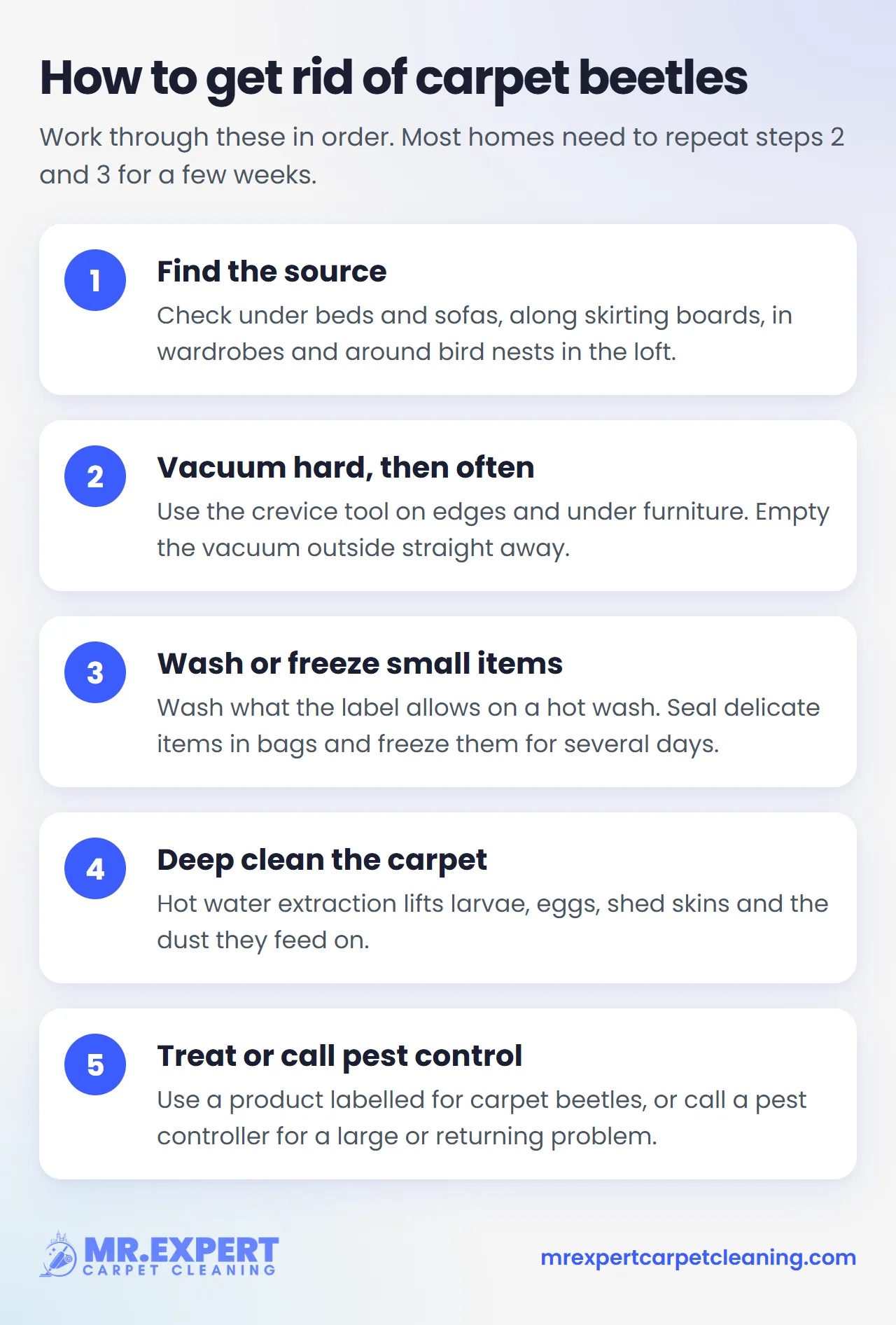
Go through the hiding places above with a torch. Throw away badly damaged items you do not want to keep, sealed in a bag. If there is an old bird nest in the loft, removing it (safely, outside nesting season) often stops new beetles arriving.
Vacuum the whole floor, then go back over the edges, under furniture and inside wardrobes with the crevice tool. Vacuum both sides of rugs. Empty the bin or bag outside straight away, so larvae do not crawl back out. Repeat this every few days for several weeks. Eggs hatch over time, so one big clean is rarely enough.
Wash clothes, throws and cushion covers on the hottest wash the care label allows. For delicate wool or items you cannot wash, seal them in a plastic bag and put them in the freezer for several days. Let them come back to room temperature before opening the bag, then brush and vacuum them.
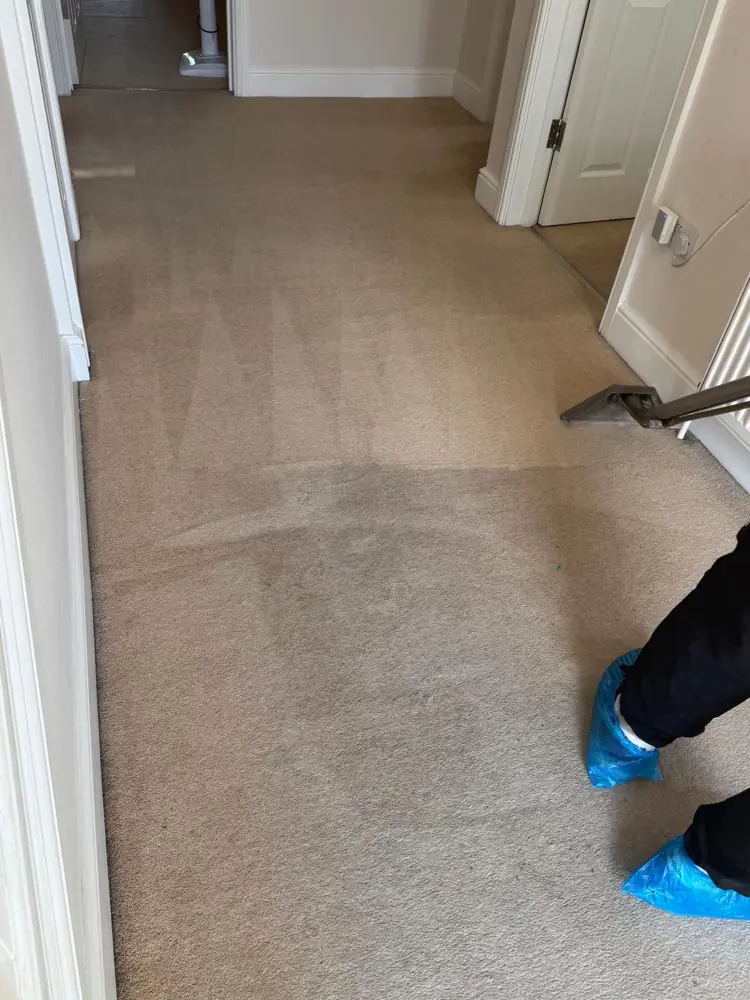
Vacuuming removes what is on the surface. A professional hot water extraction clean flushes out larvae, eggs, shed skins, hair and the fine dust they feed on from deep in the pile. It is a very useful part of the plan, especially for wool carpets and rugs. On its own it is not a guaranteed cure for a heavy infestation, so pair it with the other steps.
Once the source is dealt with, a professional deep clean removes larvae debris, shed skins and dust from deep in the pile. Our team covers Slough and the surrounding area.
For a small problem, an insecticide labelled for carpet beetles can be applied to edges and hiding places. Always follow the label, keep children and pets away until it is dry, and test on a hidden patch of carpet first. For a large infestation, or one that keeps coming back, a pest control professional is the safest choice.
Both damage wool, and people often confuse them. Clothes moth larvae are creamy white with a brown head and leave silky webbing or cases behind. Carpet beetle larvae are striped, hairy and leave bristly shed skins with no webbing. The clean-up steps above help with both.
Usually not. Once larvae find a good food supply, such as a wool rug that is rarely moved or a build-up of hair and fluff under a bed, they keep feeding. Adults then lay eggs nearby and the cycle starts again. Larvae can take many months to develop, and they are easy to miss because they avoid light. That is why the damage often seems to appear suddenly, even though it has been building for a while.
A few adult beetles on a windowsill in early summer are not always a sign of an infestation, because adults fly in from outside. But if you also find larvae, shed skins or fresh holes indoors, act straight away. The earlier you start, the less damage there is to repair.
Carpet beetles do not only live in fitted carpet. Check these too:
Once the beetles are dealt with, a professional clean of affected rugs and upholstery removes the debris left behind and leaves the fibres fresh.
Call in help if you keep finding larvae after a few weeks of regular vacuuming, if valuable wool carpets or rugs are being damaged, or if you simply want the carpets properly cleaned once the problem is under control. Pest control deals with the insects. Our team deals with the carpets, rugs and upholstery, lifting the debris and dirt left behind. Find out more about our carpet cleaning service.
They do not bite or spread disease. Some people react to the tiny hairs on the larvae with itchy skin or a rash. The main harm is damage to natural fibres.
Larvae prefer wool, silk, feathers and fur, but they will live in synthetic carpet if it holds hair, food crumbs or dust. They often feed on wool rugs placed on top of synthetic carpet.
Hot water extraction removes many larvae, eggs and the debris they feed on, which helps a lot. It is not a guaranteed cure for a heavy infestation. Treat the source too, and use pest control if the problem keeps coming back.
Adults are most often seen from spring to late summer, usually on windowsills because they are drawn to light. Larvae can feed indoors all year round.
Call or WhatsApp for the fastest reply, or leave your details and we will get back to you.