
Carpets are one of the most common reasons for deposit deductions. To protect your deposit, compare the carpets with the check-in inventory, deal with stains and odours before you move out, and return the carpets in the same clean condition you received them, allowing for fair wear and tear. Keep photos and any cleaning receipts as evidence.
When you move out of a rented home, the carpets get a close look. Stains, odours and grey walkways are some of the most common reasons landlords and agents give for deposit deductions. The good news is that most carpet problems are avoidable or fixable, if you plan ahead. This guide explains what to expect and how to give yourself the best chance of getting your full deposit back.
In England, the Tenant Fees Act 2019 limits the fees landlords and agents can charge. It generally means a landlord cannot require you to pay for a professional cleaning service as a condition of your tenancy. What they can expect is that you return the property, including the carpets, in the same condition and standard of cleanliness as when you moved in, allowing for fair wear and tear.
So the question is not “did you hire a professional?” but “are the carpets as clean as they were at check-in?”. If the carpets were professionally cleaned before you moved in, a quick vacuum is unlikely to bring them back to that standard. A professional clean is often the easiest way to match it. Always check your own tenancy agreement, and if in doubt, look at the official government guidance.
| Usually fair wear and tear | Usually not |
|---|---|
| Some flattening in walkways | Large or obvious stains |
| Slight fading from sunlight | Burns and melted patches |
| Light general soiling after years of use | Pet urine stains or odour |
| Minor indentations from furniture | Rips, chewing or pulled loops |
The length of the tenancy matters. Carpets after six months should look very different from carpets after six years.
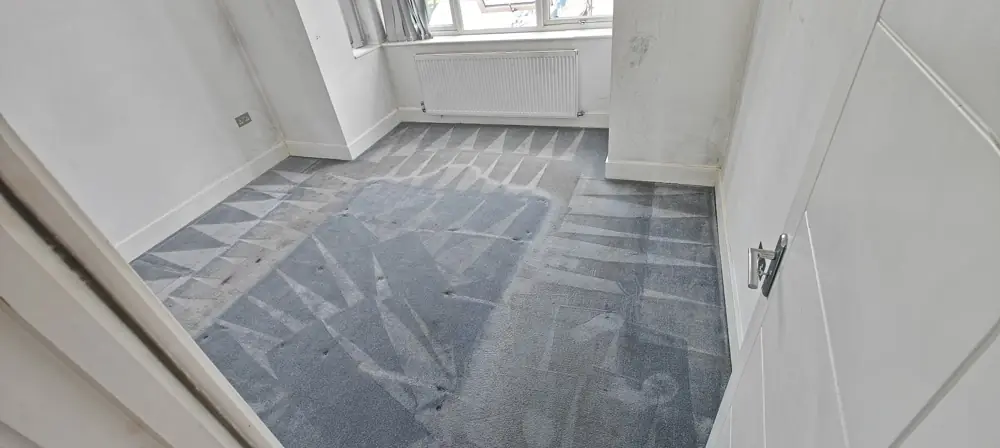
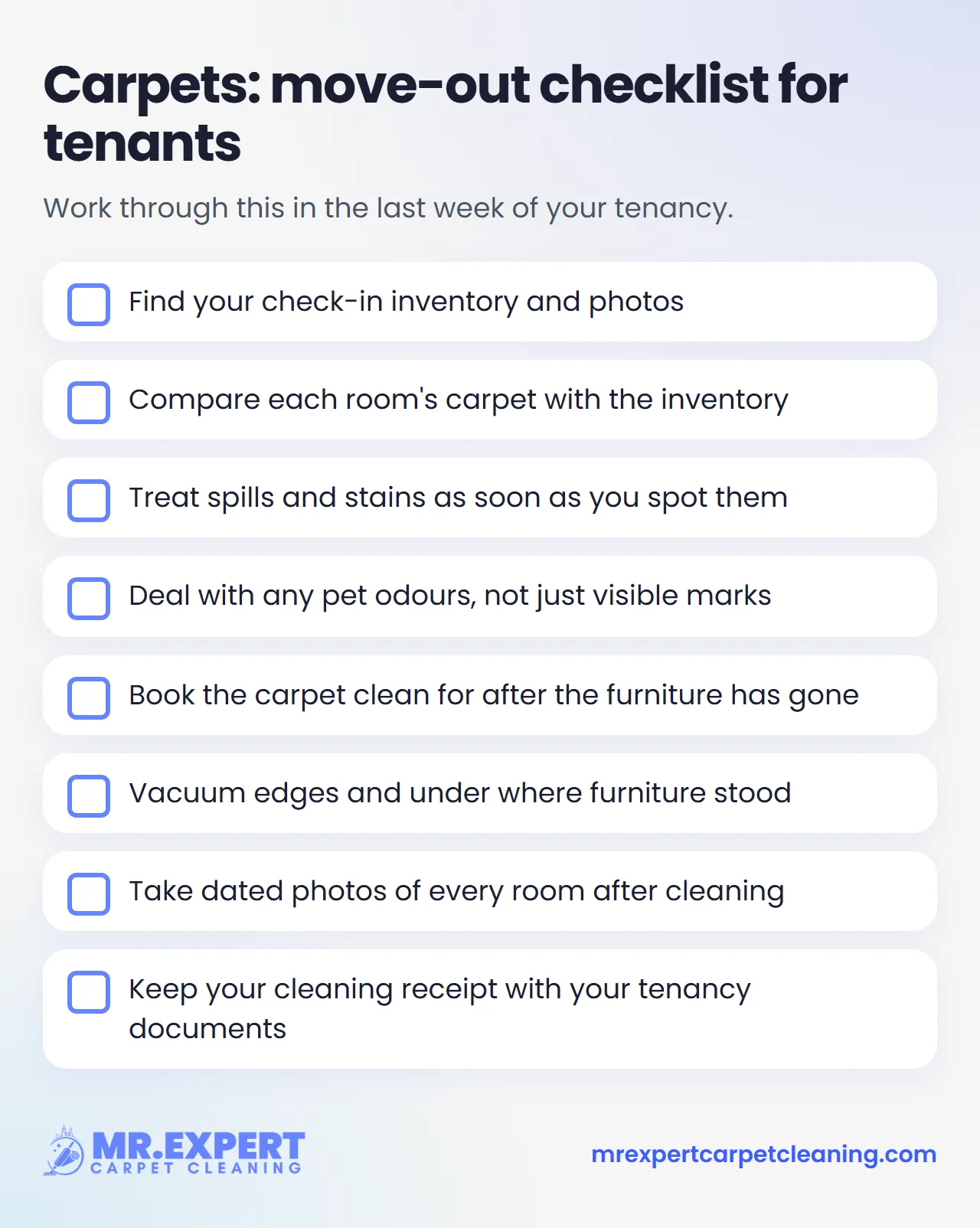
Start with your check-in inventory. It should describe the condition of each carpet and include photos. That is the standard you will be measured against. Then walk through each room and note anything that has changed: spills, marks under the sofa, a pet’s favourite spot by the door.
Treat stains as early as you can. Fresh marks are much easier to remove than old ones. Our guides on getting blood out of carpet and removing pet urine smell cover two of the most common problems.
Book your end of tenancy carpet clean for after the furniture has gone. Our team covers Slough and the surrounding area.
Book the clean for when the furniture and boxes have gone. That way every part of the carpet gets cleaned, including the areas that were hidden under beds and sofas, which often look quite different. Most carpets dry in about 2 to 3 hours with good airflow, but leave yourself a day or two before the check-out inspection in case of any delays.
After the clean, take clear, dated photos of every room in good light. Keep the cleaning receipt with your tenancy documents. If there is a dispute and your deposit is in a government-approved protection scheme, you can use the scheme’s free dispute service. Photos and receipts make a big difference.
Our team cleans carpets, sofas and mattresses at the end of tenancies across Slough and the surrounding area. Our end of tenancy carpet cleaning checklist has more detail, and you can find out more about our end of tenancy cleaning service.
In England, the Tenant Fees Act 2019 generally stops landlords requiring tenants to pay for professional cleaning as a condition of the tenancy. They can expect the carpets back in the same condition as at the start, allowing for fair wear and tear. Check your tenancy agreement and the official guidance if you are unsure.
Normal flattening in walkways, slight fading and general signs of everyday use are usually fair wear and tear. Large stains, burns, pet damage and strong odours usually are not.
After the furniture and boxes have gone, ideally a day or two before the check-out inspection, so the carpets have time to dry.
If your deposit is protected in a government-approved scheme, you can use the scheme's free dispute service. Photos and receipts help your case.
Call or WhatsApp for the fastest reply, or leave your details and we will get back to you.